eFHUB™ 27
- 4.3
- Rating
- 10.00M
- Installs
- Free
- Price

 Analysis by App-foxy
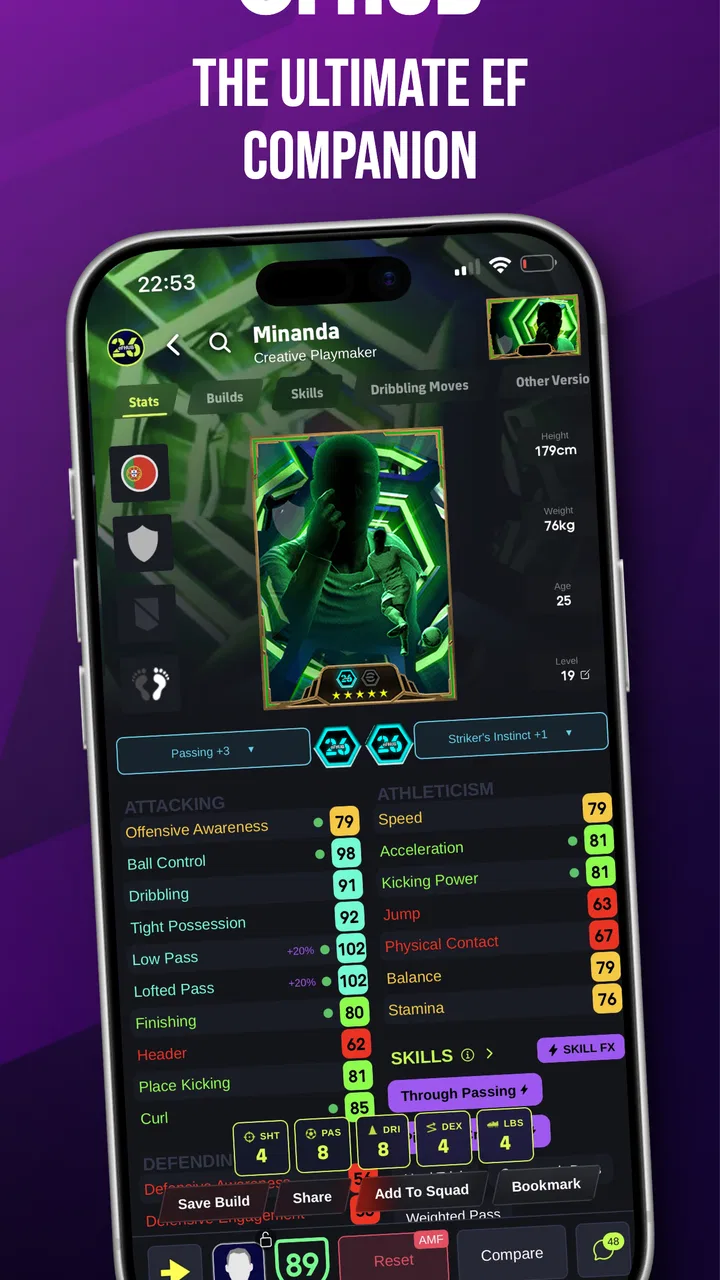
I approached eFHUB™ 26 as a practical football companion rather than as another game to play. It is a free sports app from Nova Software Studio, built around tactics, skills, databases, and related reference material for people who want to make better decisions in eFootball. That distinction matters: the app does not replace the match itself. Its value appears before a match, between matches, or whenever I want to check an idea without opening several unrelated sources.
My first impression was that this is most useful for players who enjoy the planning side of football games. If you like comparing options, adjusting a formation, learning a technique, or checking player information, the app gives you a focused place to do that. If you only want to start a match immediately and do not care about preparation, much of its appeal will pass you by.
The app has reached more than five million installs and holds an average rating of 3.8 from roughly thirty-eight thousand ratings, so it clearly has a sizeable audience while still leaving room for mixed experiences. I can understand that balance. A companion app can be extremely helpful when its information matches the way I play, but it can also feel unnecessary when I already have a settled squad and a reliable routine.
You May Also Like

 Blood Strike: 2.5 Anniversary
Blood Strike’s Loadouts Turn Every Drop Into a Tactical Gamble
A close look at Blood Strike’s custom loadouts: how fast access to signature weapons reshapes its battle royale rhythm, rewards preparation, and narrows the gap between fights.

 Pandora - Music & Podcasts
Pandora’s Music Is Easy to Start, but Harder to Recover
Pandora’s strength is its low-effort path from a seed to a station. Its weak spot is how much confidence it asks you to place in connection, setup, and quiet recovery.

 8 Ball Pool
 Is Built on Rivalries, Rematches, and Routine
A close look at the rivalries, rematches, shared routines, and unanswered safety questions that turn a quick pool match into a persistent mobile community.

 Samsung Music
’s Quiet Strength Is Playing What You Already Own
Its reach comes less from spectacle than from dependable access to a personal library. That simplicity is both the app’s strongest retention engine and its ceiling.

 AccuWeather: Weather Radar
AccuWeather Review: A Quick, Clear Forecast for Everyday Decisions
For everyday plans, the best forecast is the one you can understand quickly. AccuWeather makes rain timing, radar, and local conditions easy to act on, with a few trade-offs.

 Hill Climb Racing
Why Hill Climb Racing Still Turns Crashes Into One More Run
A tiny car, a bumpy hill and one more upgrade: Hill Climb Racing keeps resurfacing because its simple chaos makes every near-miss feel personal.
More From Our News Desk
View All News


How the companion fits around a real match
The most natural workflow is to use it as a preparation tool. I would open the app before entering a match, look at the tactical material, review a skill or player detail, and then return to the game with one specific change in mind. That last part is important. Browsing without a purpose can become passive scrolling, while checking one question—whether a tactical idea suits my squad, for example—turns the app into something actionable.
I found the database concept particularly useful for reducing guesswork. In a football game with many players and possible combinations, memory is unreliable. A reference app gives me a way to pause and inspect choices instead of selecting a player simply because I recognize the name. The benefit is not that it makes every decision for me; it helps me make a more deliberate decision.
The tactics section is also better approached as a starting point than as a set of instructions I must copy. A formation that looks effective on paper may not suit the players I actually use, my preferred tempo, or the opponent in front of me. I would treat each suggestion as a testable idea: change one element, play enough matches to notice the effect, then decide whether it deserves a permanent place in my setup.
That method reveals one of the app’s less obvious strengths. It can help separate a tactical problem from a player problem. If I keep losing control in midfield, I might first blame an individual card. Reviewing the tactical options encourages me to consider spacing, roles, and balance before spending time searching for a replacement. For a player who tends to make expensive changes too quickly, that pause can be genuinely valuable.
What I would check before changing a squad
I would not open the app with the vague goal of “improving everything.” Instead, I would use a short checklist. First, identify the area causing trouble. Second, inspect the relevant tactical or skill information. Third, make one change in the game. Finally, return only if the result raises a new question. This keeps the companion from becoming a distraction and makes it easier to tell whether the advice helped.
Another useful habit is to compare alternatives rather than searching for a single perfect answer. Football games rarely reward one universal setup. A tactic may be attractive for attacking pressure but leave gaps that matter against a patient opponent. A skill may look appealing but be less useful for the players I actually control. The app is most effective when I use its material to understand trade-offs, not to chase a supposed shortcut.
This is also where it differs from the usual alternatives. A general web search can provide more opinions, videos, and discussion, but it often scatters the information across pages and requires filtering outdated or contradictory advice. A video can demonstrate a move more clearly, yet it is slower when I only need to check one detail. The companion-app format is more direct for quick reference, even if it cannot replace the broader explanation or personal testing that those alternatives provide.
When the network becomes part of the experience
Connectivity shapes how comfortable the app feels in everyday use. Reference material is most useful when I can reach it at the moment a question appears, such as after a frustrating match or while considering a squad change. If loading is slow or a section does not respond promptly, the small task of checking information becomes an interruption rather than a helpful pause.
I would therefore use it during a stable connection whenever possible, especially before a longer session. That does not mean I would assume every part of the experience behaves the same way in every situation. Network conditions vary, and a companion app is naturally more convenient when its content can be reached without waiting. The practical lesson is simple: check important information before the match begins instead of relying on a last-second lookup.
There is a subtle difference between browsing for interest and browsing for a decision. If I am casually exploring tactics, a delay is merely annoying. If I am trying to confirm something immediately before changing my squad, the same delay can make me abandon the process and return to an old habit. For that reason, I prefer using the app as a planning tool rather than treating it like an always-open control panel beside the game.
Using it comfortably on a phone
The mobile format makes sense for this kind of companion. I can check a detail while sitting away from my main gaming setup, think through a squad change during a break, or review a technique without opening a desktop browser. That flexibility is one of the strongest reasons to choose a dedicated app instead of relying entirely on general search.
At the same time, a phone screen encourages quick decisions, and quick decisions are not always good decisions. I would avoid making major squad changes while distracted or rushing. The better mobile workflow is to note the question, inspect the relevant material, and then test the idea later when I can concentrate on the match. The app supports preparation, but it cannot remove the need to observe what happens in play.
It is also a reasonable fit for players who switch between short sessions. Someone who plays a few matches after work may not want to spend a long time researching. A focused reference point can make that limited time more productive. Conversely, players who enjoy deep analysis on a large screen may find a phone less comfortable for comparing several possibilities at once. In that case, a browser-based guide or video may be the better companion for extended study.
The Everyone content rating makes the app broadly approachable, and the minimum operating-system requirement is Android 7.0. That gives it a practical place on many older Android phones, although the experience will still depend on the individual device and connection. The current version is 2.1.036, so I would keep the app updated through the normal store process when an update is available, particularly if a section behaves unexpectedly.
What happens when something goes wrong
Any app used alongside a game needs a simple recovery routine. If a page takes too long to load, I would first stop repeatedly tapping and give the connection a moment. Repeated requests rarely make a slow network feel faster. If the issue continues, I would close the app, reopen it, and return to the same section rather than changing several things at once.
If the information feels confusing, I would also check whether I am asking the app to answer a question it cannot answer by itself. A database can organize details, and tactical material can suggest approaches, but neither can know exactly how my matches are unfolding. When a recommendation does not work, that is not automatically an app failure. I would review the match situation, undo the last change, and test a smaller adjustment.
This recovery approach prevents a common mistake: treating one bad result as proof that an entire tactic is useless. A connection problem, an unfamiliar setup, or a poor matchup can all distort the first test. I prefer to change one variable, play again, and use the app for the next targeted check. That makes the experience less frustrating and gives the reference material a fair chance.
I would also avoid depending on the app for a decision that must be made instantly. If I am already on a match screen, a slow lookup is not worth losing focus. The app works better before the match or during a deliberate break. That boundary is a real limitation, but it is easy to manage once I stop expecting the companion to behave like part of the game interface.
Managing data and paid extras
Because the app is free to download, it is easy to try without committing money first. It includes in-app purchases ranging from $1.49 to $5.99 per item, so I would explore the free experience before deciding whether any optional purchase adds enough value to my routine. I would not pay simply because I feel stuck in the game; I would pay only if a particular reference feature saves me time repeatedly.
For data-conscious use, I would browse on Wi-Fi when I expect to spend a long time exploring. I would also avoid leaving the app open unnecessarily and would use it for a defined task rather than endless refreshing. These are ordinary habits, but they matter more for a companion app because its usefulness comes from repeated short visits. Small sessions are easier to control than leaving it running beside the game all day.
The free price is especially helpful for casual players who want to see whether tactics and databases fit their style. A serious player may get more value from returning frequently, but that does not mean every serious player needs to purchase anything. The right question is whether the app changes my decisions for the better. If I keep opening it only to browse without applying what I learn, a paid item would not solve the underlying problem.
I would also remember that online reference material can change in usefulness as the game environment changes. Advice that worked for one style of play may not remain ideal after my squad, habits, or preferred approach changes. The app should support my judgment, not replace it. That is a more sustainable way to use any unofficial companion.
Who will get the most from it
I would recommend it to players who enjoy building squads, experimenting with tactics, and learning skills through repeated practice. It is especially suitable for someone who often asks, “What should I try next?” and wants a structured place to begin. The combination of tactical guidance and reference information makes more sense for that person than for someone who only wants a quick match.
It can also help a returning player rebuild confidence. After time away, I might remember the broad idea of how I want to play but forget the details that made a setup comfortable. Reviewing the available material gives me a way to refresh my approach without relying entirely on memory or copying the first video that appears in a search.
I would be more cautious about recommending it to a player who wants official, in-game guidance only. Since it is an unofficial companion, it should be treated as an external aid rather than an authoritative part of the game. Players who dislike switching between apps, depend on instant access during matches, or prefer long-form visual instruction may find a video guide, community discussion, or direct experimentation more satisfying.
There is also a personality fit involved. The app rewards curiosity and patience. It is less useful for someone who wants one guaranteed formation or a shortcut to winning. Football games involve execution, timing, and adaptation, so no database or tactics reference can remove those parts. The app can improve preparation, but it cannot turn an unsuitable style into a comfortable one overnight.
My final view on staying connected
After looking at it as a daily companion rather than a one-time download, I see a clear but specific purpose. It brings tactics, skills, and database-style reference material into a mobile space that is easier to consult than scattered searches. Its best moments happen when I have a focused question and enough time to test the answer properly.
The connection requirement is part of that convenience. When access is smooth, the app fits neatly between matches and helps turn frustration into a concrete experiment. When access is interrupted, the experience loses momentum, which is why I would prepare before a session and avoid treating it as an emergency tool during live play. That small adjustment makes the network-dependent nature much less disruptive.
Nova Software Studio has made a free sports companion aimed at a clearly defined audience, and the broad Everyone rating makes it easy to approach. The app is not a replacement for the football game, a guarantee of better results, or a substitute for learning through matches. Its real strength is helping me make more thoughtful changes instead of impulsive ones.
For me, that makes it worth trying if I enjoy the strategic side of eFootball and want a compact mobile reference. I would skip it if I rarely adjust tactics, dislike external companions, or need everything to work instantly inside the match itself. Used with realistic expectations, it is a useful planning aid: open it with a question, check the relevant material, test one change, and let the result—not the app alone—decide what stays in my squad.
FAQs for eFHUB™ 27
01What is eFHUB™ 26 and what features does it offer?
eFHUB™ 26 is a comprehensive football simulation app designed to enhance your virtual football management experience. The app offers features like player stats analysis, team management tools, real-time match simulations, and tactical adjustments. It’s an ideal platform for football enthusiasts looking to dive deep into the strategic aspects of the game.
02Is eFHUB™ 26 available for both Android and iOS devices?
Yes, eFHUB™ 26 is available for download on both Android and iOS platforms. You can find it on the Google Play Store for Android devices and the Apple App Store for iOS devices. The app is optimized for a range of devices, ensuring a seamless experience whether you're using a smartphone or tablet.
03Does eFHUB™ 26 require an internet connection to function?
While eFHUB™ 26 can be used offline for certain features like player stats and tactical planning, an internet connection is required for real-time match simulations, updates, and accessing the latest team data. For the best experience, it's recommended to have a stable internet connection, especially during live events.
04Is there any cost associated with using eFHUB™ 26?
eFHUB™ 26 is free to download, but it offers in-app purchases for premium features. These include advanced analytics tools, exclusive player data, and ad-free usage. While the basic version offers plenty of functionality, purchasing premium features can enhance your overall experience and provide more in-depth insights.
05How does eFHUB™ 26 handle user data and privacy?
eFHUB™ 26 is committed to protecting user privacy and follows strict data protection regulations. The app collects minimal personal data, primarily for enhancing user experience and app functionality. Users can review the privacy policy within the app to understand what data is collected and how it's used, ensuring transparency and security.
Pros
- User-friendly interface enhances experience.
- Comprehensive player database for research.
- Regular updates with latest team data.
- Detailed stats for in-depth analysis.
- Works smoothly with no noticeable lag.
Cons
- Limited offline functionality available.
- Occasional ads can be distracting.
- In-app purchases may be costly.
- Requires stable internet for updates.
- Some features locked behind paywall.

eFHUB™ 27
Gallery